Game of Life
Conway's automaton as a perfectly observable, deterministic grid world.
Conway's Game of Life rendered as a queryable data model. The board is a toroidal grid of cells, each an independent finite-state machine whose next state is a pure function of its eight neighbours. A generation runs as a two-turn protocol: living cells broadcast a message to their neighbours, then every cell counts the pings it received and applies the birth/survival rule. Because the update is synchronous, the outcome is identical no matter what order the cells are stepped in.
A clean, fully-observable testbed for spatial and temporal reasoning. The rules are trivial and deterministic, so any discrepancy between a prediction and the next board is unambiguously the predictor's — there is no hidden state to blame. Seeds include the classic still-lifes, oscillators and a glider.
A live replay of a simulation run — scrub, step and explore.
Linked tables with guaranteed referential integrity.
Generated REST endpoints. Also exposed as MCP tools.
OSI-compatible definition, emitted with the dataset.
# game-of-life.osi.yaml — emitted automatically
semantic_model:
  name: "game-of-life"
  source: "duckdb://game-of-life.db"
  entities:
    - name: cell
      primary_key: id
  dimensions:
    - name: state
      type: categorical
    - name: t
      type: time
  measures:
    - name: row_count
      agg: count
    - name: active
      agg: sum
      filter: "state = 'ACTIVE'"
More worlds.
 ▶ REPLAY
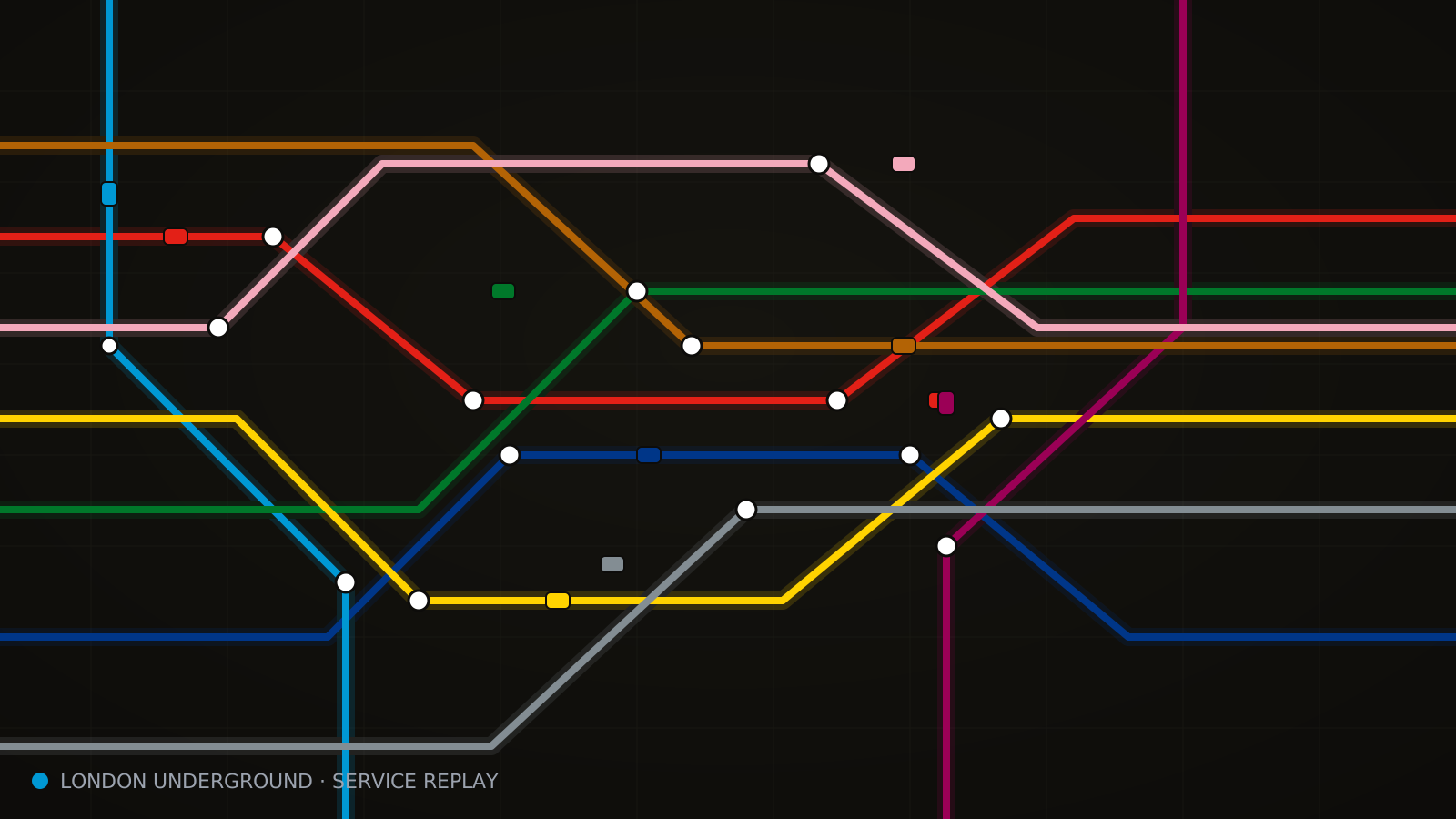
 London Underground
A live tube graph — eleven lines, hundreds of trains, platforms held as a mutex.
 ▶ REPLAY
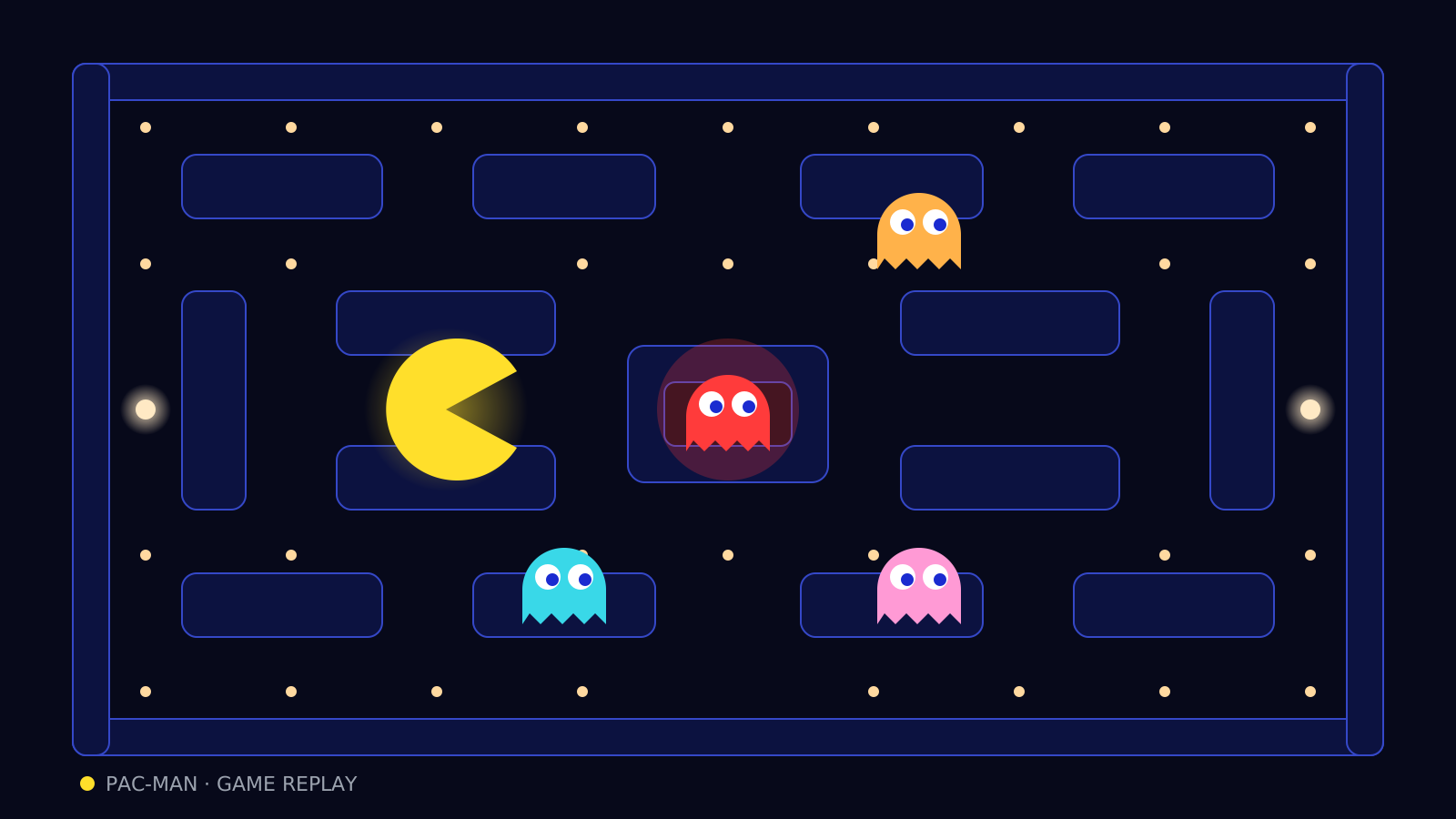
 Pac-Man
A self-playing arcade game — ghosts chase a flood-filled distance field.
Claims FNOL
First notice of loss through settlement, with capacity-capped regional adjusters.